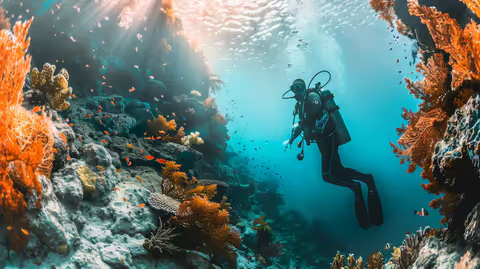
The development of deep sea diving tours became possible with advancements in diving equipment and safety procedures. Early diving methods were limited and required specialized training, but modern technology has made underwater exploration more accessible to a wider audience. Equipment such as oxygen tanks, pressure regulators, and buoyancy devices plays a central role in enabling safe diving.
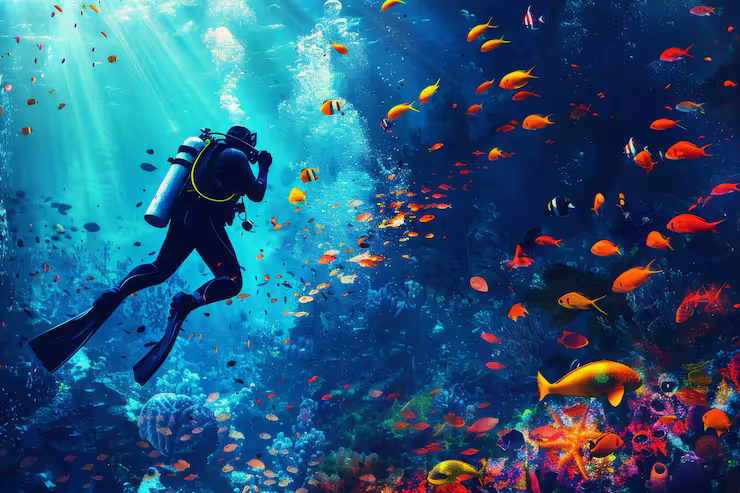
The primary purpose of these tours is to provide a controlled and educational experience of the underwater world. Participants are guided through specific locations while following safety guidelines, allowing them to observe marine environments without direct impact. This combination of exploration and structure makes deep sea diving tours a recognized activity in marine tourism.
Importance
Deep Sea Diving Tours are important because they connect people with marine ecosystems in a direct and meaningful way. Many individuals have limited exposure to underwater environments, and these tours offer an opportunity to understand ocean biodiversity more closely.
They also play a role in environmental awareness. By observing marine life in its natural setting, participants often develop a better understanding of ocean conservation challenges such as pollution and habitat degradation. This awareness can influence attitudes toward protecting marine ecosystems.
From a practical perspective, these tours address the challenge of safe underwater exploration. Without proper guidance and equipment, diving can involve significant risks. Organized tours provide structured supervision, training, and safety measures that reduce these risks.
Deep sea diving tours also support local economies in coastal regions. They contribute to tourism-related activities, including transportation, accommodation, and training programs. This creates a connection between environmental appreciation and economic activity.
Recent Updates
Recent trends in deep sea diving tours reflect technological improvements and changing participant preferences. One noticeable development is the use of advanced diving computers. These devices monitor depth, time, and decompression limits, helping divers maintain safe conditions underwater.
Another trend is the integration of eco-friendly practices. Tour operators are increasingly focusing on minimizing environmental impact by promoting responsible diving behavior. This includes avoiding contact with marine life and reducing waste in marine areas.
Virtual training tools have also gained attention. Before participating in actual dives, individuals can use simulation-based learning to understand basic techniques and safety procedures. This approach improves preparedness and confidence.
Equipment design has seen improvements as well. Lighter materials, improved air flow systems, and enhanced visibility features have made diving gear more comfortable and efficient. These changes contribute to a more controlled and manageable diving experience.
Laws or Policies
Deep Sea Diving Tours are influenced by various regulations that focus on safety, environmental protection, and training standards. In India, coastal and marine activities are monitored by authorities such as the Ministry of Tourism and maritime regulatory bodies.
One key area is certification. Participants are often required to undergo basic training or orientation before diving. Certified instructors follow guidelines established by international diving organizations to ensure consistent safety practices.
Environmental regulations are also important. Marine protected areas have specific rules that restrict certain activities to preserve ecosystems. Divers are expected to follow guidelines such as not disturbing coral reefs or marine species.
Safety policies include equipment checks and emergency preparedness. Operators must ensure that all diving gear meets safety standards and that emergency response plans are in place. These measures help manage potential risks associated with underwater activities.
Additionally, liability and insurance requirements may apply to organized tours. These policies define responsibilities and provide a framework for handling unexpected situations during diving activities.
Tools and Resources
Several tools and resources are available to support individuals interested in deep sea diving tours. These resources focus on improving knowledge, safety, and overall experience.
Diving manuals and guides provide detailed explanations of techniques, equipment usage, and safety procedures. These materials are often used during training sessions and serve as reference points for beginners.
Mobile applications designed for divers offer features such as dive logs, location tracking, and safety reminders. These tools help participants monitor their activities and maintain records of their diving experiences.
Training platforms and certification programs play a significant role in preparing individuals for diving. These programs include theoretical lessons and practical sessions that cover essential skills.
Equipment checklists are another useful resource. They help ensure that all necessary gear is prepared before a dive. Common items include masks, fins, tanks, regulators, and protective suits.
Below is a table summarizing key equipment used in deep sea diving tours:
| Equipment | Purpose | Importance in Diving |
|---|---|---|
| Diving Mask | Provides clear underwater vision | Essential for navigation and safety |
| Oxygen Tank | Supplies breathable air | Enables extended underwater time |
| Regulator | Controls air flow from tank | Ensures safe breathing |
| Buoyancy Control Device | Maintains stability underwater | Helps control depth and movement |
| Fins | Assists in movement through water | Improves efficiency and control |
| Wetsuit or Drysuit | Protects against temperature and pressure | Enhances comfort and safety |
FAQs
What are deep sea diving tours?
Deep Sea Diving Tours are guided underwater experiences where participants explore marine environments using specialized equipment and follow structured safety procedures.
Are deep sea diving tours safe for beginners?
Many deep sea diving tours are designed to accommodate beginners. Basic training, supervision, and safety instructions are typically provided to help participants understand essential techniques.
What equipment is required for deep sea diving tours?
Common equipment includes a diving mask, oxygen tank, regulator, buoyancy control device, fins, and protective suits. Each item plays a role in ensuring safe and comfortable diving.
How long do deep sea diving tours usually last?
The duration can vary depending on the location and depth of the dive. Some tours last a few hours, including preparation and training, while actual underwater time is usually shorter.
Do deep sea diving tours require prior training?
Some tours require basic certification, while others include introductory sessions for beginners. The level of training depends on the complexity of the dive and safety requirements.
Conclusion
Deep Sea Diving Tours provide a structured way to explore underwater environments while maintaining safety and environmental awareness. Advances in technology and training have made these experiences more accessible to a broader audience. Regulations and safety guidelines play an important role in ensuring responsible participation. Understanding equipment, preparation, and safety measures helps individuals approach diving with greater confidence. Overall, these tours combine exploration, education, and controlled adventure in marine settings.